How Peer-to-Peer Rental Works: Booking, Protection, and Deposits Explained
Renting a tile saw from a shop is a familiar routine. Renting the same saw from the person three streets over raises new questions. Who holds the deposit? What if it comes back scratched? How do you even pay? Peer-to-peer rental answers all of them, just differently from a rental counter.
This guide walks through how peer-to-peer rental works on GoatRent, from the first search to the final review, with a close look at the three things people ask about most: booking, protection, and deposits. If you want the step-by-step story of a single rental, read the complete rental journey on GoatRent. This piece explains the rules behind it.
What Peer-to-Peer Rental Means
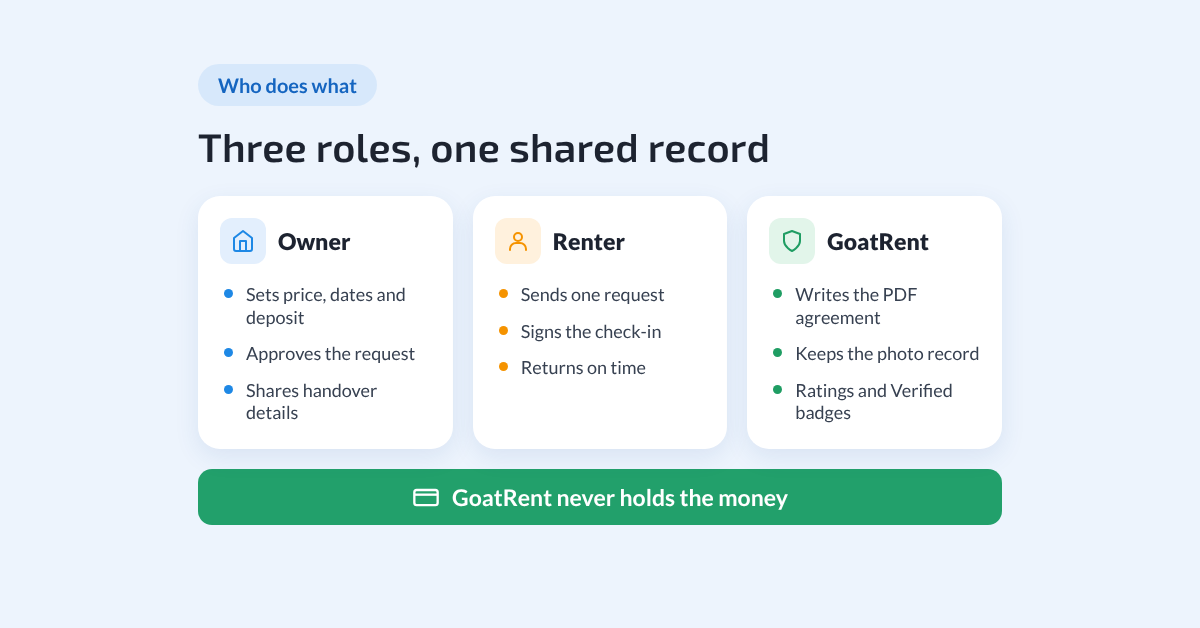
In a peer-to-peer rental, the person who owns the item rents it to you directly. GoatRent doesn't own a single tool, trailer or kayak. It's the marketplace in between: it shows you what's nearby, carries your request, writes the agreement and keeps the record of the handover.
That split matters, because it explains every rule below. The owner decides the price, the dates and whether to say yes. The platform makes sure both of you are looking at the same terms and the same evidence.
Booking: One Request Instead of a Conversation
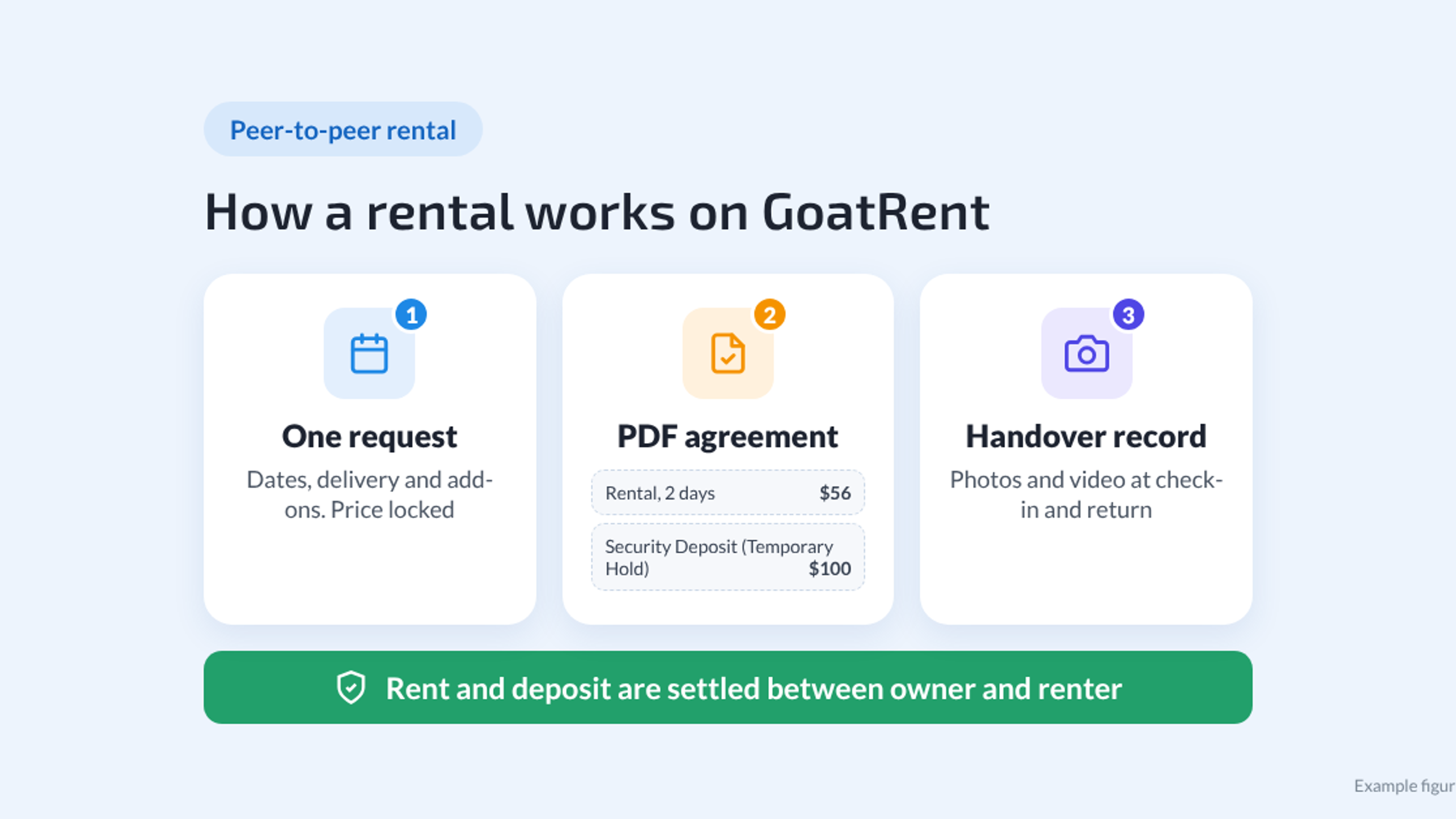
On classified sites, a rental starts with "is this still available?" and goes downhill from there. On GoatRent you send one structured request that carries everything the owner needs to decide:
- Your dates. If the listing sets a minimum rental, say three days, a shorter request is refused with the minimum spelled out.
- How the item moves. Pickup, a meeting in a public place, delivery by the owner, mail, or a third-party courier.
- Add-ons. Extra blades, a spare battery, a hitch adapter, whatever the owner offers.
- The price. You see the line items and the total before you send, and that price is locked. If the owner changes their rate in the meantime, you're asked to confirm the new price instead of being surprised by it.
There are no platform fees or taxes added on top. What you see is what the owner asked for.
Sending a request doesn't reserve anything yet. Only an approved request holds the dates, so two people can ask for the same weekend and the owner picks one. Until approval, you see the item's area on the map, a circle a few hundred meters wide, not the owner's address.
Approval: Where the Rental Becomes Real
When the owner approves, three things happen at once.
First, the owner shares the handover details: a contact name and phone number, the address if there is one, a time window for the handover and any notes on where to meet. For pickup or a public meetup, you choose an exact time inside that window in 15-minute steps.
Second, the dates are now reserved for you, and nobody else can book them.
Third, GoatRent generates a PDF Rental Agreement for Equipment. It lists the item, the dates, the price lines and the delivery arrangement. Both of you can download it from the request. Until check-in, each side's personal details on the PDF read "Available after Check-In", so nothing private is exposed before you actually meet.
There's no need to call, message or email to arrange any of this. The request, the arrangement and the agreement cover it. If something does need saying, there's a comment field on the request, visible to both of you.
Deposits: Shown in the Agreement, Settled Between You
This is the part people get wrong most often, so here it is plainly.
An owner can set a security deposit on a listing. When they do, you see it in the request total before you send it, and the PDF agreement shows it on its own line: Security Deposit (Temporary Hold).
GoatRent does not collect it, hold it, or release it. The platform doesn't process any money at all, not the rent and not the deposit. You and the owner settle both at the handover, in whatever way you agree on, and return the deposit when the item comes back as agreed.
Why do it this way? Because it keeps the deal between the two people who are actually part of it, with the amount written down where both of you agreed to it. No one has to wonder what a middleman did with the money.
A practical tip: settle how the deposit will be paid and returned when you meet, and add a comment on the request saying what you agreed. It takes a minute and it's on record.
Protection: A Record, Not an Insurance Policy
GoatRent is not an insurance company, and it doesn't run damage claims or decide disputes. What it gives every rental is something simpler and, in practice, very effective: a shared record of what was agreed and what condition the item was in.
- Verified badges. Members can verify their identity with a government ID through Stripe. Verified owners show a "Verified Owner" badge on their listings.
- Weighted ratings. Ratings take the number of reviews into account, so one odd review can't define anyone.
- AI moderation of every listing. Before a listing goes live, AI checks all of it in one pass: the title, description, category, specs, price and deposit, every photo and the video. Each problem it finds gets a severity. Serious ones, like illegal content, scams, contact details in the text or a photo, or a price that makes no sense, keep the listing from going live. Smaller ones come back to the owner as tips. The check runs again whenever the owner changes what renters see.
- The PDF agreement. The terms, in writing, for every request.
- Check-in and check-out. At handover and at return, each side can add a note, up to five photos and one video. Everything is timestamped and visible to both. The renter signs the check-in, and a few minutes of photos settle most "it was already like that" questions before they start.
The rental is the renter's responsibility while it's in their hands, as the agreement says. If you need coverage beyond that, for example for an expensive trailer, sort it out with your own insurer before you rent. That's also covered in how GoatRent keeps renting safe and transparent.
Returning the Item
Bring it back at the agreed time and do the check-out together: fresh photos, fresh notes. You can return early, too; filing the check-out simply completes the rental. If the rental closes before you've filed the return, you still have 24 hours to add it.
Then you review each other. Every honest review makes the next rental with that person easier, for everyone.
Peer-to-Peer Rental vs a Rental Shop, in One Line
A shop owns the gear, sets the rules and holds your card. On GoatRent the owner sets the rules, you settle with each other directly, and the platform keeps the agreement and the evidence. For a closer look, see GoatRent vs traditional rental shops and classifieds.
Peer-to-Peer Rental FAQs
Does GoatRent charge a booking fee?
No. There are no platform fees or taxes on a rental. You pay the owner the price shown in the request.
Who holds my deposit?
Nobody but the owner, if they ask for one. The amount is written in the agreement as "Security Deposit (Temporary Hold)", and you settle it with the owner at the handover.
What happens if something breaks?
The check-in and check-out photos show the condition before and after, and the agreement says who is responsible while the item is out. GoatRent doesn't decide claims; the record is there so you and the owner can settle it fairly.
Can I cancel?
Yes, until the rental is under way: while the request is pending or approved, and at check-in until the renter has signed.
Final Words
Got something that would earn more on loan than on a shelf? List your gear on GoatRent in under a minute, set your own price, dates and deposit, and let the agreement and the record do the rest. List your gear