How to Make Extra Money by Renting Out Your Tools and Equipment
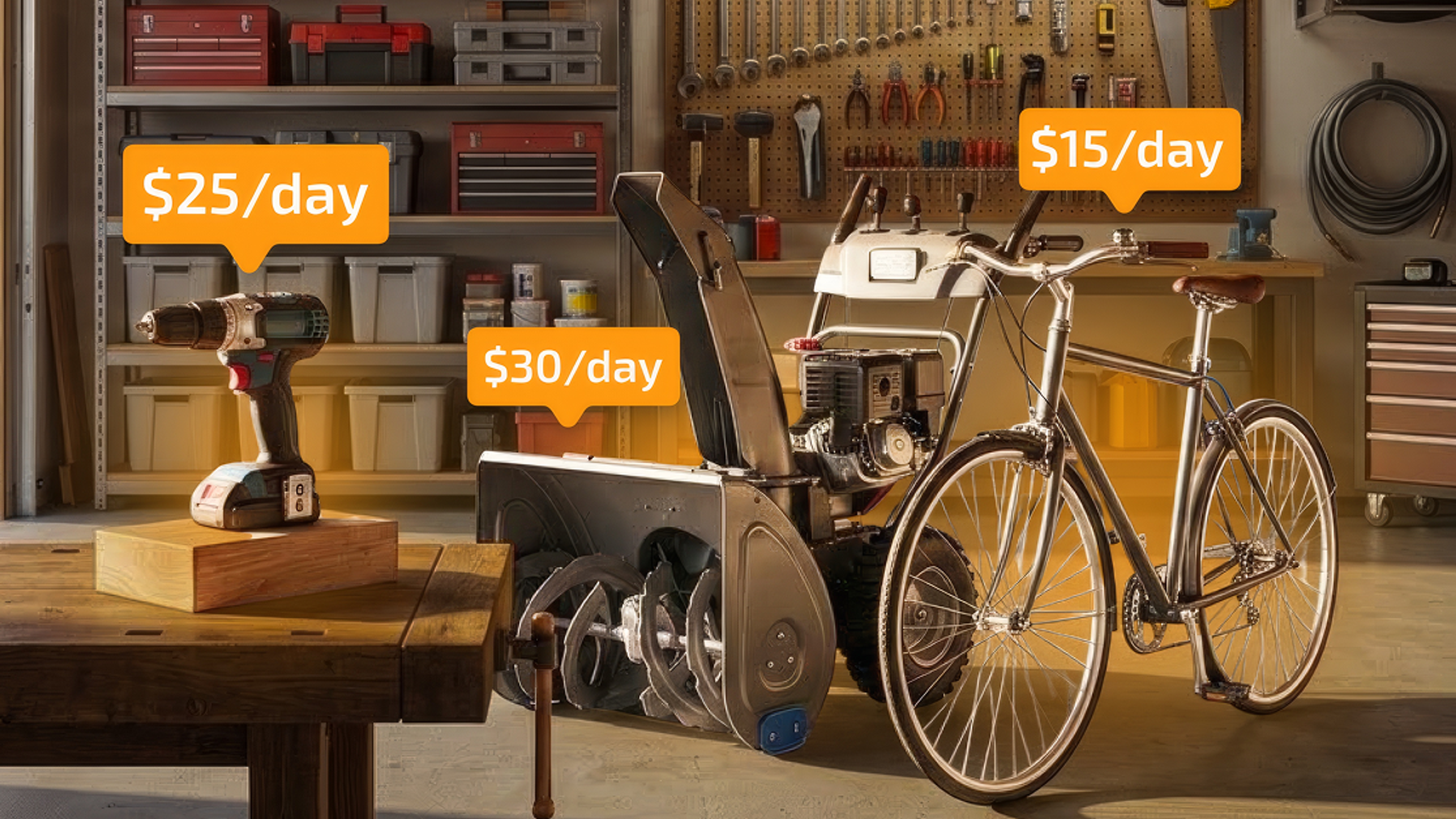
Your garage is sitting on money. The pressure washer. The tile saw. The camping gear. The PA speaker from that one party. Thousands of dollars in equipment, used a few days a year and quietly losing value on a shelf.
Want to make money renting out tools you already own? Good news: it's the most accessible side income around. No new skills. No inventory to buy. No boss. You already own everything you need. A local rental marketplace just introduces your gear to neighbors who'll happily pay for access. Here's how to do it right, and why list your gear on GoatRent beats leaving it on a shelf.
Your Idle Gear Is an Untapped Asset
Your garage is full of stuff other people need but never buy. Power tools, lawn equipment, ladders, trailers, kayaks, projectors, folding tables, generators. Everybody needs this stuff regularly. Almost nobody buys it themselves. That's the whole opportunity, right there. Expensive to buy, needed occasionally. That's exactly the profile renters hunt for. It's why more owners than ever earn extra income renting belongings that used to just gather dust. When you rent out your equipment instead of letting it sit, every item turns into a small revenue stream.
And here's the kicker versus selling: you keep the asset. A $400 miter saw might fetch $150 used. Once. Rent it at $30 a day for ten days a year and it earns $300 annually, while staying yours. The math isn't close. Owners who rent repeatedly come out way ahead of owners who sell once.
What Rents Best
Some gear earns, some gear just sits there. The difference is pretty simple: the winners cost a lot to buy, get needed once in a while, and are easy to hand over. Power and workshop tools nail all three. Pressure washers, tile saws, rotary hammers, sanders. That's the bread and butter, the stuff that rents week after week.
Lawn and garden equipment is right behind it. Aerators, tillers, chainsaws, hedge trimmers. Spring is chaos for these, seriously. Outdoor gear too: kayaks, paddleboards, e-bikes, camping kits. Event equipment: speakers, projectors, tents, folding tables and chairs. And trailers and transport, utility trailers, roof boxes, bike racks. Nobody wants to own a trailer, which is exactly why they rent.
Seasonal stuff is where the real money hides. Snow blower goes up in November. Pressure washer in April. Camping gear in May. Demand runs on a calendar, so meet it where it is.
Pricing Your Listings Right
This is where new owners mess up. They either leave cash on the table or price themselves into silence. A sane approach:
- Check comparable listings near you. Local demand sets your market. Not national averages.
- Start a touch below the going rate for your first few rentals. Reviews come faster. Then you adjust upward.
- Think in the right unit. Each listing gets one price and one unit, per hour, day, week, or month, so set it to match how the gear actually rents. Longer bookings, fewer handovers. You'll thank yourself.
- Price add-ons separately. Delivery, spare batteries, attachments. Small extras lift every booking's value.
- Raise prices in peak season. Demand spikes, rates follow. Everybody expects it.
A workable benchmark: if something rents for around 5–10% of its purchase price per day, you're in healthy territory. A $300 tool at $25 a day pays for itself in twelve rental days. Not bad.
Creating a Listing in Under a Minute
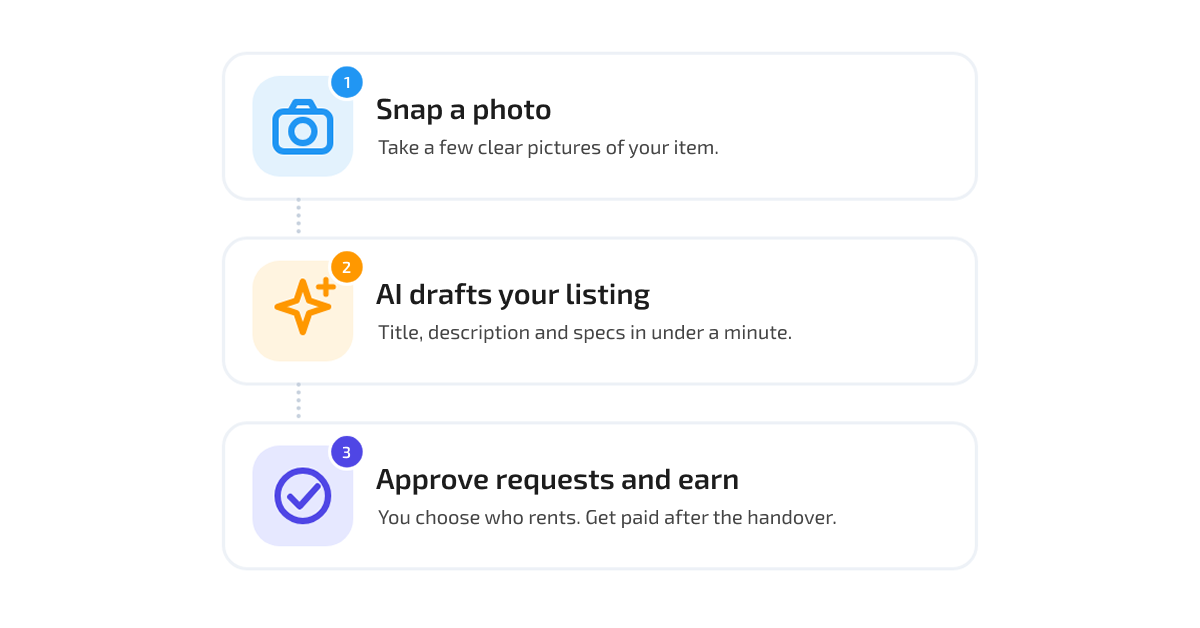
That old "listing things is such a hassle" line doesn't really hold up here. If you're brand new to the platform, it helps to know what GoatRent is and how it works. To list tools for rent on GoatRent, you take a photo. One photo. From there, the AI takes over the tedious parts. Category, picked. Title and description, drafted. Specs, filled in. You just give everything a quick once-over, punch in your price and availability, and hit publish. The whole thing is done in under a minute.
Photos still matter more than anything else. Shoot in daylight. Show a few angles. Include the accessories. Don't hide the wear. Listings with clear, honest photos get requested way more, and they attract renters who know exactly what they're getting. Fewer surprises for you.
Earning Trust (and Five-Star Reviews)
In peer rental services, reputation is your store front. A few good reviews are better than any pricing gimmick. How can one get such reviews?
- Respond fast. Owners who approve quickly get booked first. It's that simple.
- Be accurate. If the listing says "like new," it had better be like new. Renters notice.
- Keep gear maintained. Clean it, charge the batteries, confirm it works. Before every handover. Not after a complaint.
- Spell out the handover. Exact meeting spot, what to bring, how the return works. No guessing.
- Document condition together. One quick photo at handover. Thirty seconds, protects you both.
Renters have long memories for reliability. Plenty of owners end up renting to the same neighbors over and over, repeat customers with zero marketing spend.
Safety and Paperwork, Handled
Handing your stuff to strangers sounds reckless, until you see the safety net. It's the same system behind how GoatRent keeps renting safe and transparent. Every GoatRent request auto-generates a PDF agreement laying out the terms. At handover and return, both sides can attach timestamped photos, videos, and notes, one shared, timestamped record of the item’s condition. Members can verify ID through Stripe for a Verified badge, and ratings are weighted by review count, so a single unfair review can’t torpedo you.
The practical version? Verify yourself. Keep listings honest. Photograph handovers. The system covers the rest.
Do the Math on Your Own Gear
Give it ten minutes. Walk through your garage with fresh eyes. Pick five items. Estimate a daily rate for each at roughly 7-9% of purchase price. Guess a realistic number of rental days a year. Something like:
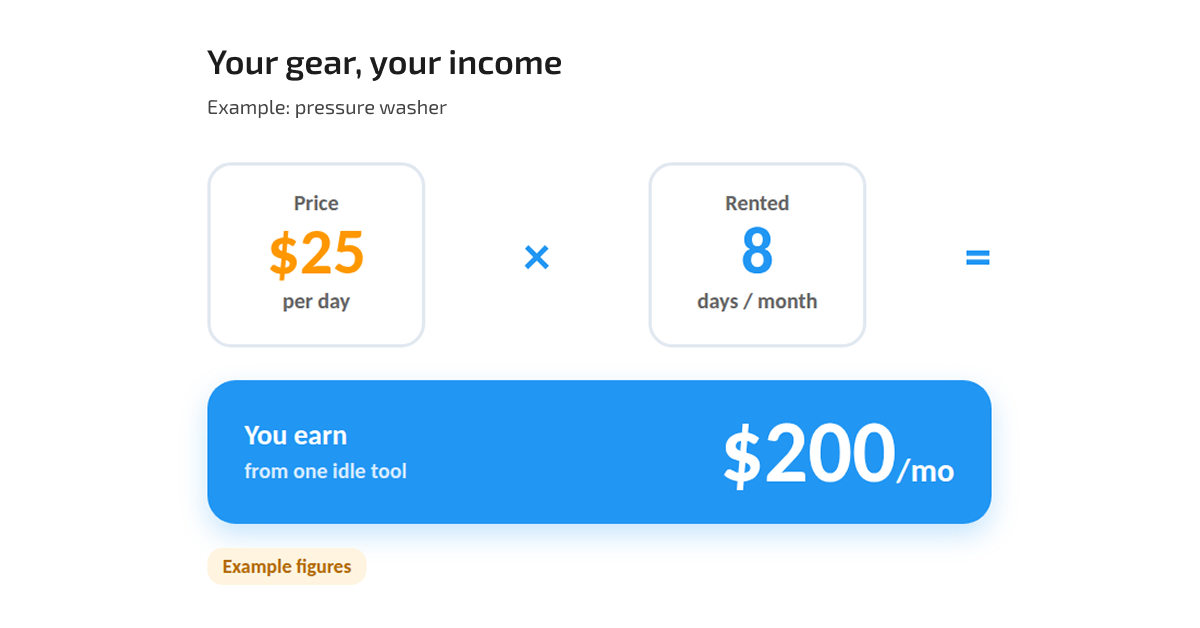
- Pressure washer ($300 new) → $25/day × 8 days = $200/year
- Tile saw ($350 new) → $30/day × 6 days = $180/year
- Camping kit ($500 new) → $40/weekend × 5 weekends = $200/year
Illustrative examples. Five unremarkable listings can quietly generate hundreds, sometimes thousands, a year from gear that was doing absolutely nothing. It's about as close to passive income from tools as it gets: your stuff, working while you aren't.
Fitting Rentals Around Your Life
The worry that stops most would-be owners cold: "I don't want to be on call for strangers." Fair. Also unnecessary. You call every shot here.
Your calendar, your rules. Set your availability as always available, or limit it to a date range that suits you, a season, a stretch when the item would only sit idle anyway. And nothing is ever booked behind your back: only requests you approve reserve your dates. The platform bends around your availability, not the other way around.
Set minimums that respect your time. Trailers, big equipment, anything where handover is a production: set a two-day minimum so each booking is worth it.
Pickup, delivery, or both. Offering delivery, even for a small fee, blows your renter pool wide open, lots of people will gladly pay extra to skip borrowing a truck. Prefer not to? Pickup-only is completely normal. Just say so upfront so expectations are set.
Batch your handovers. Got several items listed? Line up the booking windows. One Saturday morning of meetups beats five scattered evenings. A little scheduling turns renting from a chore into a routine.
Once your listings are live, the weekly time cost is tiny. Most active owners spend well under an hour a week on bookings. The first one takes the longest, after that it's copy, tweak, publish.
Conclusion
Walk through your garage tonight and pick three items. List the first one on GoatRent, under a minute, and let your gear start pulling its weight.